

What Is the Strongest Natural Antibiotic for a Tooth Abscess?
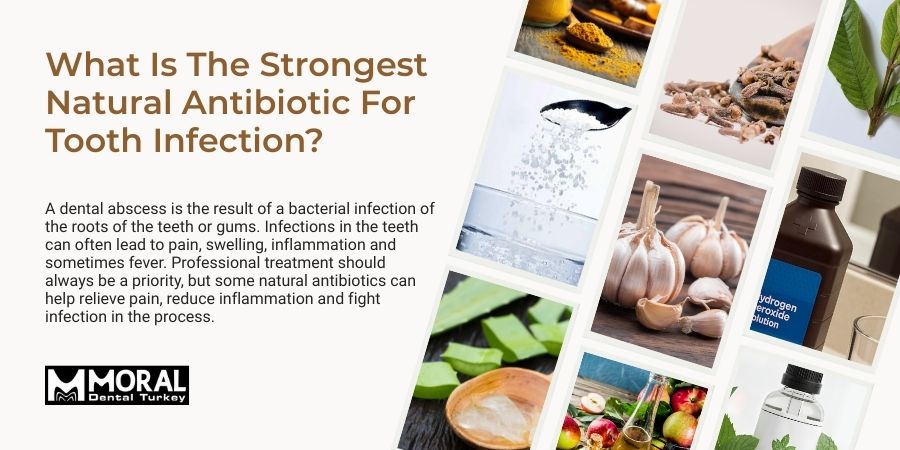
A dental abscess is the result of a bacterial infection of the roots of the teeth or gums. Infections in the teeth can often lead to pain, swelling, inflammation and sometimes fever. Professional treatment should always be a priority, but some natural antibiotics can help relieve pain, reduce inflammation and fight infection in the process. Here are powerful natural solutions you can use against tooth abscesses and infections:
1. Salt water mouthwash
Salt water is an old treatment for tooth infections. Salt kills bacteria and helps reduce swelling.
How to use it.
Add 1 teaspoon of salt to a glass of warm water and rinse your mouth with this mixture. You can repeat 2-3 times a day.
2. Clove oil
Clove oil is a natural antibiotic known for its pain relieving properties. Thanks to the compound called eugenol, it has an effective pain relieving and antibacterial property.
How to use?
Put a few drops of clove oil on a cotton swab and gently apply it to the sore area.
3. Garlic
Garlic has a strong antibiotic property as it contains allicin compound and clears infections.
How to use?
Crush a clove of garlic and apply directly to the affected area. Consuming raw garlic can also help fight infection.
4. Hydrogen peroxide rinse
Hydrogen peroxide relieves inflammation in the gums and fights bacteria.
How to use it.
Gargle by mixing a teaspoon of hydrogen peroxide with a glass of warm water. It can be done 2-3 times a day.
5. Aloe vera
Aloe vera can be used in the treatment of tooth abscess with its antibacterial and anti-inflammatory properties.
How to use?
Apply fresh aloe vera gel directly to the abscessed area and rinse after waiting 10-15 minutes.
6. Turmeric
Turmeric shows a natural antibacterial and anti-inflammatory property. It cleans infections and relieves pain in the treatment of tooth abscess.
How to use?
Mix a teaspoon of turmeric with water to make a paste. Apply this mixture to your tooth and leave for 10-15 minutes. Then rinse with warm water.
7. Guava leaves
Guava leaves have antibacterial properties that improve dental health.
How to use?
Brew guava leaves in boiling water and gargle with this water. You can also relieve pain by chewing fresh guava leaves.
8. Apple cider vinegar
Apple cider vinegar kills bacteria on the teeth and reduces inflammation in the gums.
How to use it?
Add a teaspoon of apple cider vinegar to a glass of water and gargle once a day. Be careful not to use too much.
9. Peppermint oil
Peppermint oil relieves pain and kills bacteria with its cooling effect, which is effective against tooth abscess.
How to use it.
Put a few drops of peppermint oil on a cotton swab and apply it to the abscessed area. You can also gargle by adding a few drops of peppermint oil to warm water.
10. Oil mouth rinsing (Oil pulling)
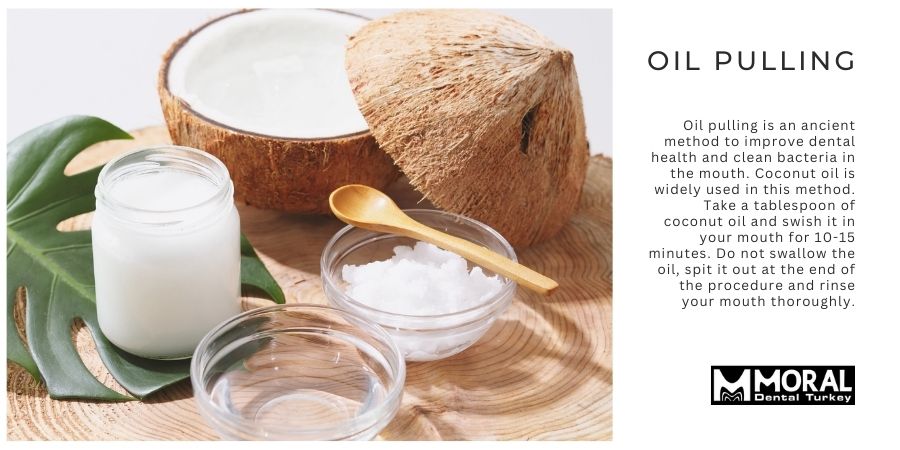
Oil pulling is an ancient method to improve dental health and clean bacteria in the mouth. Coconut oil is widely used in this method.
How to use it?
Take a tablespoon of coconut oil and swish it in your mouth for 10-15 minutes. Do not swallow the oil, spit it out at the end of the procedure and rinse your mouth thoroughly.
11. Sumac water
Sumac is a natural herb with anti-inflammatory properties and improves oral health.
How to use?
Add 1 teaspoon of sumac to a glass of water and gargle with this mixture. Do this when you show signs of infection.
12. Carbonated water
Baking soda relieves inflammation in the gums and relieves pain. It also kills bacteria in the mouth.
How to use?
Add 1 teaspoon of baking soda to a glass of warm water and gargle with this mixture. It can be repeated several times a day.
13. Green tea
Green tea, with its antioxidant properties, can reduce inflammation in the gums and relieve pain.
How to use?
Brew a bag of green tea in boiling water and gargle after cooling. You can apply this method several times a day.
14. Honey
Natural honey has anti-inflammatory, antibacterial and antioxidant properties. It supports healing by applying directly to the abscessed area.
How to use?
Apply some honey directly to the abscessed area and create a protective layer that will help prevent bacteria from multiplying.
15. Echinacea
Echinacea is a plant that strengthens the immune system and can be effective as an antibiotic and antimicrobial in dental infections.
How to use it?
You can gargle with echinacea drops or a brew prepared from fresh leaves.
16. Propolis
Propolis produced by bees is a natural compound with antibacterial properties. This product, obtained from tree buds and bark, can be diluted with water and gargled.
How to use it?
Add a teaspoon of propolis to a glass of water and gargle with this mixture. It can also help heal wounds.
17. Goldenseal
Goldenseal is a plant native to North America with antibacterial properties, which contains berberine. It can be used to treat tooth abscess.
How to use it?
Goldenseal can be consumed as a brew or used as a mouthwash. However, it is recommended to consult your doctor before use.
FAQs
Do we always need antibiotics?
One of the frequently asked questions about the use of antibiotics in dental infections is whether we always need antibiotics. The answer is not always. Antibiotics are a powerful tool in the fight against bacterial infections, but they are not always vital in the treatment of dental infections.
In particular, in infections caused by tooth decay, antibiotics are only used until the symptoms are relieved, and the actual treatment is done with procedures that require intervention inside the tooth, such as root canal treatment. On the other hand, it can be useful to use natural antibiotics and alternative treatment methods to control infections before they progress.
Can natural remedies replace professional dental care?
Natural remedies can provide temporary relief from dental infections and pain, but they are not a substitute for professional dental care. Serious conditions, such as a tooth abscess, require interventions such as root canal treatment. Natural antibiotics can help short-term to relieve pain, reduce inflammation and control the infection, but these treatments cannot solve the source of the problem.
To prevent and treat dental infections, it is important to follow the treatment methods recommended by a professional dentist.
Importance of oral hygiene: prevention of tooth decay and gum disease
Tooth decay and gum disease are among the most common oral health problems today. Prevention of these diseases depends on regular oral hygiene. Brushing, flossing and regular visits to the dentist are essential elements of protecting your dental health. Paying attention to oral hygiene prevents bacteria from accumulating on your teeth and prevents infections from occurring.
It is also possible to support oral health by using natural antibiotics. For example, applications with substances such as salt water mouthwash, clove oil and garlic reduce the risk of infection by killing bacteria in the mouth.
Early intervention in dental infections: importance of treatment
Tooth infections usually heal more easily if treated in the early stages. When you notice signs of infection, it is very important to contact a dentist immediately. When the infection is left untreated, bacteria can spread to the roots of the tooth, gums and surrounding tissues, which can lead to more serious health problems.
Early treatment of a dental abscess can help prevent tooth loss and maintain overall health. Modern dentistry methods offer advanced tools and techniques to treat infections quickly. Therefore, when you encounter tooth abscess and other dental problems, seek professional help without wasting time.
Importance of dentist visits: the most effective way to prevent
The most effective way to maintain dental health is to make regular visits to the dentist. Your dentist can painlessly detect tooth decay, gum disease and other problems in the early stages. Treating such problems early can prevent serious complications in the future and help you have a healthy oral structure.
Keeping your dental visits to the dentist and following their recommendations is the safest way to protect your dental health and fight dental infections.
Conclusion combination of natural remedies and professional care
Natural antibiotics can be helpful for tooth abscesses and other dental infections, but these methods are not a substitute for professional dental treatment. Natural remedies can be used to temporarily alleviate infections and provide relief. However, do not neglect regular visits to the dentist to maintain your dental health and treat dental infections. By combining both natural antibiotics and your dentist's recommendations, you can maximise your oral health.
Before we finish, we must remember this: Not all natural products are safe under all circumstances. It is important to read labels, know the possible side effects and consult a doctor or pharmacist before using any natural antibiotic. In addition, people with kidney or liver failure and pregnant or breastfeeding women should avoid using these products.