

Black Lines on Teeth: What They Mean, Why They Happen, and How to Get Rid of Them
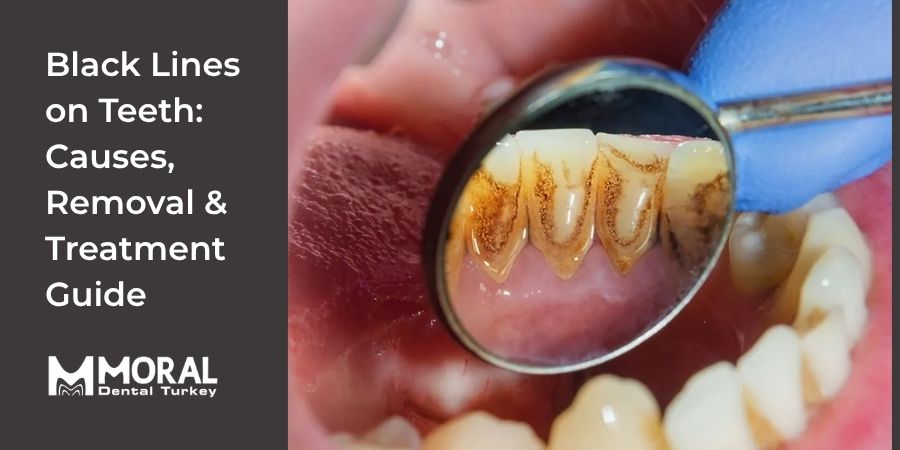
Noticing a thin black or dark line along your teeth can be alarming, especially when it appears overnight or seems to be spreading. The good news: in most cases, black lines on teeth are a cosmetic issue rather than an emergency. The less good news: they can also be an early warning sign of decay, and the only way to tell the difference is to understand what's actually causing the line — and to know when brushing harder simply won't fix it.
This guide walks through what black lines on teeth actually are, why they form (including in the grooves of molars, a spot patients ask about constantly), which home-care habits genuinely help, which "hacks" you'll find online can quietly damage your enamel, and exactly what a dentist will do about it.
What Exactly Are Black Lines on Teeth?
A black line on teeth is a streak of discoloration that typically follows the natural contour of the tooth — most often along the gumline, in the pits and fissures of the molars, or between two teeth where a toothbrush struggles to reach. It's not a single condition; it's a visual symptom that can come from several different sources, some harmless and some that need dental treatment.
The line itself is made up of one of three things:
- A layer of stained or mineralized plaque (tartar) sitting on the enamel surface
- A stain that has soaked into microscopic pores in the enamel itself
- Early demineralization or decay tracking along a natural groove in the tooth
Because these three causes look similar to the naked eye but require completely different responses, this is one dental symptom where a quick mirror-check genuinely isn't enough to self-diagnose.
Extrinsic vs. Intrinsic Black Lines
Dentists generally split black lines into two categories, and the distinction matters for how they're treated.
Extrinsic (external) black lines sit on top of the enamel. They're built from stain-forming pigments — tea, coffee, red wine, tobacco — combining with plaque and tartar. Because the tooth structure underneath is untouched, extrinsic lines are usually reversible with a professional cleaning and better daily habits.
Intrinsic (internal) black lines originate inside the tooth. These can come from:
- Decay that has started to undermine the enamel from below
- Old amalgam (metal) fillings leaching a grey-black shadow into surrounding tooth structure
- Trauma to a tooth that caused internal bleeding or nerve changes years earlier
- Pigmented bacteria (often in children) that deposit a dark line directly on enamel near the gum
Intrinsic lines are the ones that warrant a same-week dental visit rather than a wait-and-see approach, since some of their causes are actively progressing.
Why Do Black Lines Form in the First Place?
A few overlapping factors are almost always at play:
- Plaque and tartar accumulation. Plaque that isn't removed within about 48 hours starts to harden into tartar, which stains far more easily than clean enamel and is porous enough to trap pigment.
- Chromogenic bacteria. Certain bacterial species produce dark pigments as a byproduct, which is why some people — particularly children with otherwise healthy teeth — develop a persistent black line right at the gumline that keeps returning after cleaning.
- Diet and habits. Tea, coffee, red wine, and tobacco are the classic culprits because their pigments bind readily to both enamel and tartar.
- Old restorations. Amalgam fillings can corrode slightly over time, and the resulting particles discolor the surrounding tooth from the inside.
- Anatomy. Deep pits and fissures on molars are naturally harder to clean than flat surfaces, which is exactly why black lines in molar grooves are one of the most commonly searched versions of this problem.
Black Lines in Molar Pits and Grooves (A Common Sticking Point)
Molars are disproportionately prone to this issue because their chewing surfaces aren't flat — they're covered in narrow pits and fissures that a standard toothbrush bristle often can't fully penetrate. Food debris and bacteria settle into these grooves, and over time the trapped biofilm darkens.
This is one case where "brush harder" doesn't solve the problem, because the groove is often narrower than the bristle itself. Two things actually help:
- Angling the brush correctly so bristles reach into the fissure rather than skating across the top of the molar
- A professional cleaning combined with an evaluation for fissure sealants — a thin protective coating a dentist applies to seal the groove before decay can take hold
If the line in a molar groove is actually the beginning of decay rather than surface staining, it will typically show a slightly different texture (a fissure that "catches" a dental probe) and may eventually become sensitive to sweets or temperature — a sign worth mentioning to your dentist even if there's no visible cavity yet.
Self-Check: How to Tell If It's Just Staining
You can get a reasonable first read at home, though this is not a substitute for a dental exam:
- Location matters. Lines right along the gumline or inside molar grooves are the most common locations for both plaque staining and decay, so location alone doesn't rule anything out.
- Texture matters more. Run your tongue (gently) or a fingernail near the area. A smooth line usually points to surface staining. A rough or "sticky" spot is more suggestive of decay.
- Symptoms are the deciding factor. Sensitivity to cold, heat, or sweets, or any pain when biting, points toward an internal problem that needs prompt attention rather than home care.
- Mirror position. Front teeth and visible gumlines are easy to check yourself; back molars usually require either a second person, a dental mirror, or your dentist's exam light to see clearly — which is part of why molar lines often go unnoticed longer.
Safe Ways to Address Black Lines at Home
If a self-check suggests surface staining with no sensitivity, these habits are safe and genuinely effective for prevention and mild cases:
- Brush for the full two minutes, twice a day, angling bristles toward the gumline and into molar grooves rather than just scrubbing the flat surfaces
- Floss daily to disrupt plaque between teeth before it has a chance to mineralize into tartar
- Use an electric toothbrush if manual brushing consistently misses the gumline or molar pits — the consistent motion reaches areas people tend to skip
- Rinse with an antibacterial or fluoride mouthwash after brushing, particularly useful for the back molars where brushing alone may miss residue
- Cut back on tea, coffee, and tobacco, or rinse with water shortly after consuming them to limit the time pigment sits on enamel
- Replace your toothbrush every 2–3 months, since a frayed or overused brush stops reaching into grooves and along the gumline effectively, letting bacteria re-establish faster
Methods to Avoid — Even Though They're Popular Online
A lot of circulating "natural remedies" for tooth stains do more harm than good, and dentists see the aftermath regularly:
- Lemon juice, vinegar, or other acidic rinses — these erode enamel, which can make staining worse over time and increase sensitivity
- Baking soda combined with salt used aggressively or daily — mildly abrasive occasionally, but frequent use wears down enamel
- Charcoal or abrasive whitening powders — marketed as natural, but their abrasiveness can permanently dull enamel and expose more porous layers underneath, which stain more easily afterward
- Scraping with metal tools, coins, or fingernails — this can scratch enamel, creating rough spots where plaque adheres even more readily going forward
The irony with most of these methods is that they can make future staining worse by roughening the enamel surface, even when they appear to lighten a stain in the short term.
When to See a Dentist
Book an appointment rather than continuing home care if any of the following apply:
- The line hasn't improved after a few weeks of consistent brushing and flossing
- The area is sensitive to cold, heat, sweets, or pressure
- You notice a rough texture, a visible pit, or the line is spreading
- The discoloration appeared suddenly on a tooth that has previously had trauma or a large filling
- A child has a persistent black line at the gumline that returns quickly after cleaning
What Treatment Actually Looks Like
A dental visit for black lines is usually quick and non-invasive unless decay is involved:
- Visual exam and probing to check the texture and depth of the line
- X-rays, if decay is suspected, to see whether the discoloration extends beneath the enamel or into the root
- Professional cleaning (scaling) to remove surface tartar and stain — this alone resolves the majority of extrinsic cases
- Composite bonding for minor enamel defects or cosmetic correction after a stain is removed
- Fillings, if a cavity is confirmed underneath the line
- Crowns, reserved for more advanced decay or structural damage where a filling wouldn't be sufficient
Most patients are surprised that a "black line" they'd been living with for months disappears in a single 30–45 minute cleaning appointment.
Preventing Black Lines from Coming Back
Recurrence is common specifically because the underlying habits often don't change after treatment. To keep results:
- Maintain the two-minute, twice-daily brushing routine with attention to the gumline and molar grooves
- Keep up daily flossing — this is the single habit most people skip that leads to recurring lines between teeth
- Schedule a professional cleaning every six months, or more often if you're a heavy tea, coffee, or tobacco user
- Ask your dentist about fissure sealants if your molar grooves are naturally deep
FAQ
Can black lines on teeth come back after treatment?
Yes, if oral hygiene habits or diet don't change. Heavy tea, coffee, or tobacco use combined with inconsistent brushing is the most common reason lines return after a cleaning.
What causes black lines specifically on molars?
The deep pits and fissures on molar chewing surfaces trap food and bacteria more easily than flat tooth surfaces, and standard bristles often can't fully clean them — leading to staining or, if untreated, early decay.
Is a black line between the tooth and gum always a cavity?
No. It's frequently tartar buildup or pigment from bacteria at the gumline, but only a dentist can rule out early decay with certainty, especially if there's any sensitivity.
How do I remove black lines from teeth at home safely?
Consistent brushing (two full minutes, angled toward the gumline and grooves), daily flossing, and an antibacterial mouthwash are the safest home methods. Avoid acidic or abrasive DIY remedies, which can damage enamel.
Can black lines on teeth be removed without a filling?
Yes, if the line is surface staining (extrinsic) rather than decay. A professional cleaning alone often fully removes it. A filling is only necessary if the dentist confirms actual decay beneath the surface.